When an outboard is hard to start, idles roughly or stutters when you open the throttle, the spark plugs are one of the first things to check. They are cheap, quick to change, and reading the old plugs is one of the best free diagnostics you have. This guide covers how to choose the right plug, when to replace it, how to fit it and what the old ones are telling you.
Why outboards are hard on spark plugs
Outboards spend a lot of time idling and trolling, then running flat out, then standing for weeks. 2 stroke engines also burn oil with the fuel. All of that fouls plugs faster than in a car. A plug that is fouled or worn produces a weak spark, which means harder starting, misfires, poor fuel economy and more smoke.
How to find the right plug
The right plug is the one your engine manufacturer specifies. You will find the number in your owner manual, or printed on the plug already in the engine. Do not substitute a different number: the code describes the thread size, reach, heat range and design, and the wrong plug can run too hot, foul quickly or even hit the piston.
Reading an NGK part number
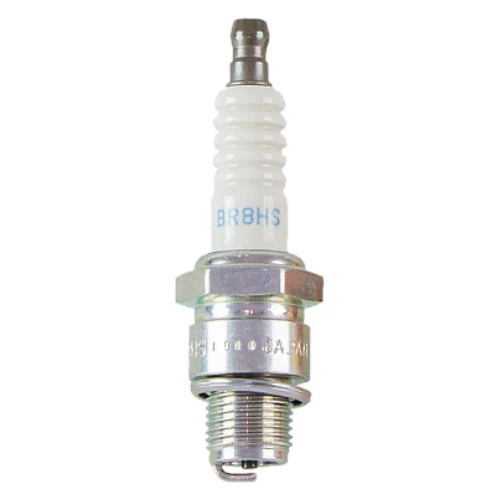
NGK uses letters and numbers to describe each plug. Taking the NGK BR8HS as an example:
| Code | Meaning |
|---|
| B | 14mm thread diameter |
| R | Resistor type, which reduces electrical interference |
| 8 | Heat range. On NGK plugs a higher number is a colder plug |
| H | Thread reach (12.7mm) |
| S | Standard centre electrode |
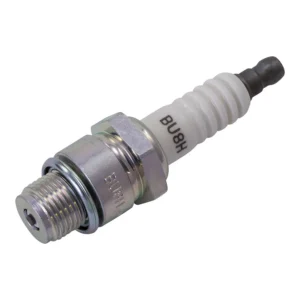
The NGK BU8H is a surface gap plug. It is only for engines designed for that type, and it has no adjustable electrode, so there is no gap to set.
When to replace outboard spark plugs
- At every annual or 100 hour service.
- When the engine is hard to start, misfires or idles unevenly.
- When the plug is oily, heavily carboned or the electrode is worn round.
- After you fix a fuel or oil mixture problem, so you start with a clean plug.
Carry a spare set. A fresh set of plugs and a plug spanner in the boat bag fixes more breakdowns on the water than almost anything else.
How to change them
- Let the engine cool. Aluminium heads are easy to damage when hot.
- Pull off one plug lead at a time by the boot, not the wire, so the leads go back on the right cylinders.
- Blow or brush any dirt away from around the plug before removing it, so nothing falls into the cylinder.
- Remove the old plug with a plug socket, keeping it in line for reading later.
- On standard plugs, check the gap against your manual with a feeler gauge. Surface gap plugs are not adjustable.
- Start the new plug by hand to avoid cross threading, then tighten to the torque in your manual, or follow the angle guide on the NGK packaging.
- Refit the lead firmly until it clicks.
Reading your old plugs
| What the plug looks like | What it usually means |
|---|
| Light tan or grey insulator, little deposit | Healthy. Correct plug and mixture. |
| Dry black soot | Running rich, lots of idling, a dirty air intake or a plug that is too cold. |
| Wet and oily (2 stroke) | Too much oil in the mix, or a plug that fouled while idling. |
| White, blistered insulator | Running hot or lean. Check the plug type and have the fuel system checked. |
| Worn, rounded electrode | Plug at the end of its life. Replace. |
If one cylinder reads very differently from the others, there may be a problem with that cylinder, such as a failing coil or a blocked carb jet. That is worth getting checked.
Keep the fuel system clean too
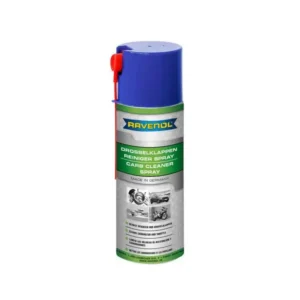
Many plug problems start in the fuel system. Old fuel leaves varnish in the carburettor and upsets the mixture. Running fresh fuel and a carb cleaner after the boat has stood will help your new plugs stay clean. For the rest of your service, see our outboard service parts checklist.
Not sure which plug your engine takes? WhatsApp us the make, model and year and we will confirm it.