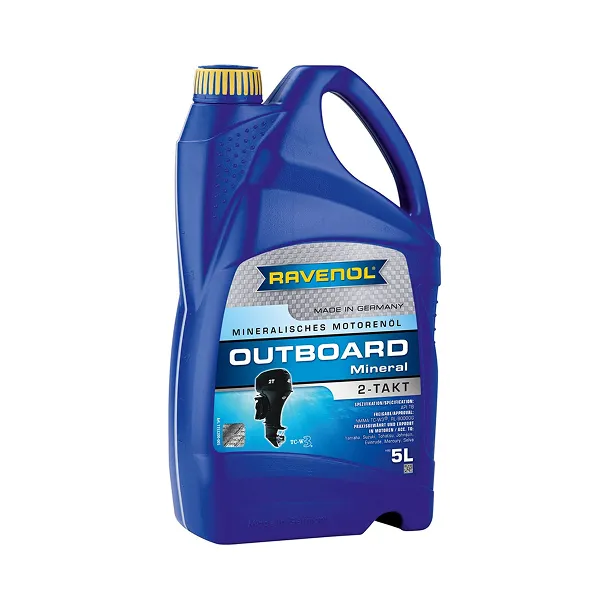
Walk into any marine shop and the oil shelf can be confusing: 2T, 4T, TC-W3, 10W-40, mineral, synthetic. The good news is that choosing outboard oil comes down to one question first, and then a quick check of your owner manual. This guide explains the difference between 2 stroke and 4 stroke outboard oil, what the ratings on the bottle mean, and how to pick the right one for your engine.
First, is your outboard a 2 stroke or a 4 stroke?
This is the most important question, because the two engine types use oil in completely different ways. Putting the wrong oil in can cause serious damage. Here is how to tell them apart:
- The cowling. Most manufacturers print “4 Stroke” or “FourStroke” on the engine cover. 2 stroke engines are often marked “2 Stroke”, “Optimax”, “E-TEC” or “HPDI”, depending on the brand.
- A dipstick and oil filter under the cowling mean it is a 4 stroke. It keeps oil in a sump, just like a car.
- An oil tank or premix fuel means it is a 2 stroke. The oil is either mixed into the petrol or fed in by an oil injection system.
- Your owner manual or the model plate on the engine bracket will confirm it.
How 2 stroke outboards use oil
A 2 stroke engine burns its oil. The oil travels with the fuel through the crankcase, lubricates the bearings, pistons and cylinder walls on the way, and then burns in the combustion chamber. That means 2 stroke oil has two jobs: protect the engine, and then burn away as cleanly as possible without leaving carbon on the pistons, rings, exhaust ports and spark plugs.
What TC-W3 means
Look for the NMMA TC-W3 rating on the bottle. NMMA is the National Marine Manufacturers Association, and TC-W3 is its certification for 2 stroke oils used in water cooled engines, which is almost every outboard. It covers lubrication, rust protection, how the oil mixes with fuel in the cold, and how cleanly it burns. Unless your manual says otherwise, a TC-W3 oil is the right choice.
Do not use air cooled 2 stroke oil. Oils made for chainsaws, brush cutters and motorbikes are formulated for hotter, air cooled engines. They are not a substitute for TC-W3 in a water cooled outboard.
Mineral or fully synthetic?
Getting the mix right
On premix engines, follow the ratio in your manual exactly. Many modern outboards run at 50:1 or 100:1, but older engines and engines that are running in can need more oil. Too little oil risks seizure, and too much causes smoke, fouled plugs and carbon build up. Mix in a clean, marked container and shake the tank before you run. On oil injected engines, simply keep the oil tank topped up with the same oil.
How 4 stroke outboards use oil
A 4 stroke outboard works like a car engine. The oil sits in a sump, a pump circulates it through the engine, and it stays there until you change it. It does not burn with the fuel. Because the same oil is doing the work for 100 hours or a whole season, it needs to resist breaking down under heat and load, and protect against the corrosion that comes with damp storage and marine air.
What SAE 10W-40 and FC-W mean
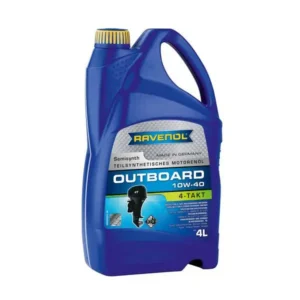
SAE 10W-40 is the viscosity grade most 4 stroke outboards specify. The first number (10W) describes how easily the oil flows when cold, and the second (40) how thick it stays at operating temperature. Many manuals also call for an oil certified to the NMMA FC-W standard for 4 stroke marine engines. Always use the grade in your manual.
Why not car oil? An outboard runs at high revs under constant load for long stretches, often straight after a cold start, then stands in damp conditions. Marine 4 stroke oils are formulated for that pattern with extra corrosion protection. Car oils are not designed for it.
Which size to buy
2 stroke vs 4 stroke oil at a glance
| 2 stroke outboard | 4 stroke outboard |
|---|
| How oil is used | Burnt with the fuel | Circulated from the sump, changed at service |
| Rating to look for | NMMA TC-W3 | SAE 10W-40, often NMMA FC-W |
| How you add it | Premix in fuel or oil injection tank | Fill through the oil cap to the dipstick mark |
| Oil filter | No | Yes, replace at each oil change |
| Shop | 2 stroke oil | 4 stroke oil |
Can you mix brands?
TC-W3 certified oils are designed to be compatible with each other, so topping up with a different TC-W3 oil in an emergency is not a problem. For the best results, stick to one oil, and avoid mixing mineral and synthetic in an injection tank. For 4 strokes, it is best to do a full change with a single oil rather than mixing.
The bottom line
Identify your engine type, then match the rating in your manual: TC-W3 for 2 stroke outboards and SAE 10W-40 marine oil for most 4 strokes. Buy enough for a full service plus a spare bottle for the boat. While you are at it, add gear lube and a set of spark plugs so your whole service arrives in one order. Our outboard service parts checklist has everything in one place.
Still not sure? WhatsApp us your engine make, model, horsepower and year and we will tell you exactly what it takes.